There is a certain magic to weekend breakfasts that feels both indulgent and nostalgic. I have spent years chasing that perfect cloud-like texture in my morning pancakes, and after many batches of trial and error, I found the answer in Japanese cuisine. Making Japanese Souffle Pancakes became my favorite Sunday ritual. Unlike the dense, flat pancakes many of us grew up with, these require a specific technique involving whipped egg whites. This recipe is born from my own kitchen experiments, aiming to recreate that jiggly, airy delight without the need for professional equipment.
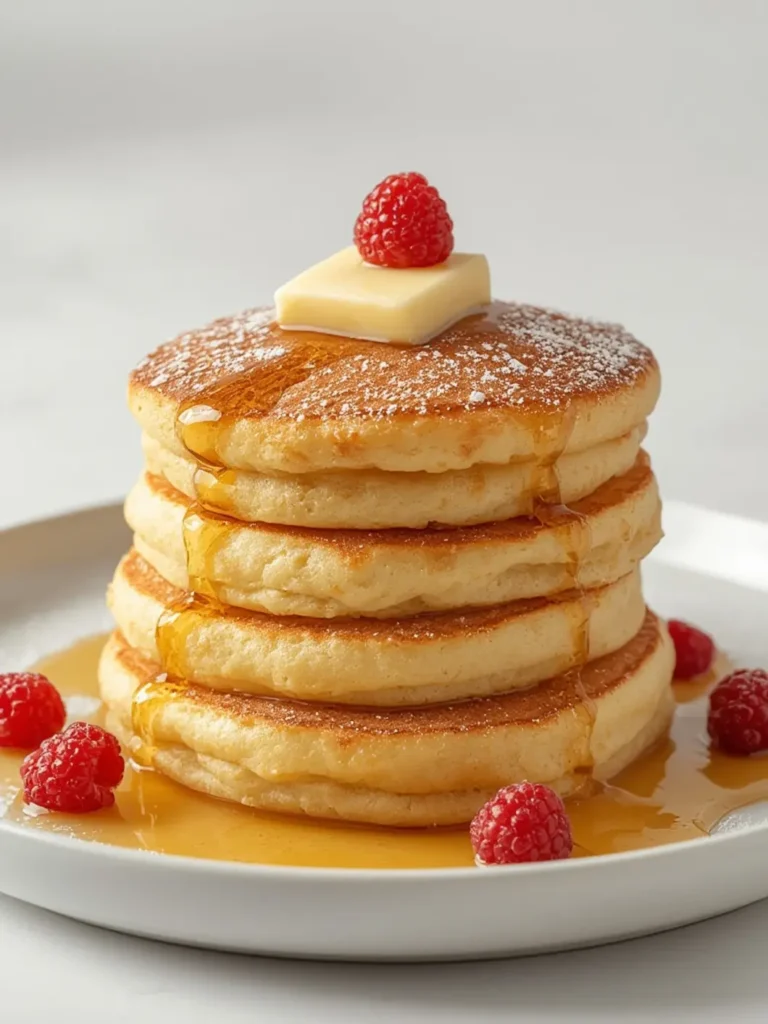
Ingredients & Equipment
The beauty of this recipe lies in its simplicity, but the quality of ingredients matters immensely. You will need two large eggs, separated into yolks and whites. Ensure your eggs are fresh, as the structure of the batter relies heavily on the egg whites. For the dry ingredients, grab ¼ cup of all-purpose flour, 1 tablespoon of cornstarch (this helps with the tender texture), 2 tablespoons of sugar, and ½ teaspoon of baking powder. For the wet mix, use 2 tablespoons of milk and ¼ teaspoon of vanilla extract.
Equipment is just as important as the ingredients here. You will need two mixing bowls—one for dry/wet ingredients and one for the egg whites. An electric hand mixer or a stand mixer is highly recommended; whipping egg whites by hand is incredibly difficult and tiring. You also need a non-stick skillet or griddle and two small rings or molds (about 3 inches in diameter) to help shape the pancakes. A thin metal spatula is essential for flipping these delicate stacks without deflating them.
Prep & Cook Time
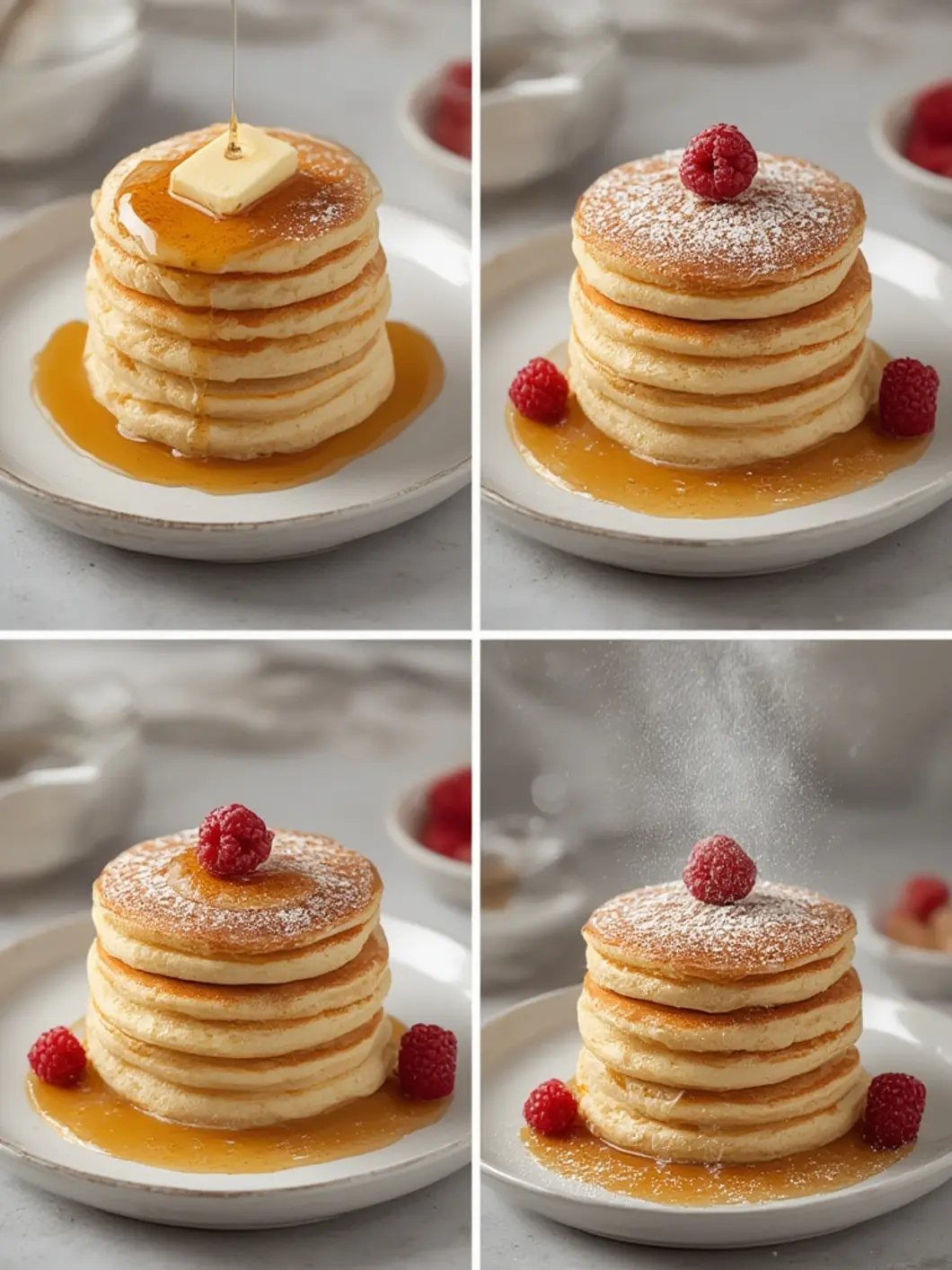
Patience is the main ingredient when it comes to the timing of these pancakes. The preparation will take you about 15 minutes, mostly spent on carefully separating eggs and whipping the meringue. Cooking time is roughly 10 minutes, depending on how many batches you make. The difficulty level is intermediate; while the steps are simple, getting the flip right the first few times can be tricky. Trust me, the effort you put into making these Japanese Souffle Pancakes is rewarded tenfold when you see that signature jiggle on your plate.
Step-by-Step Instructions
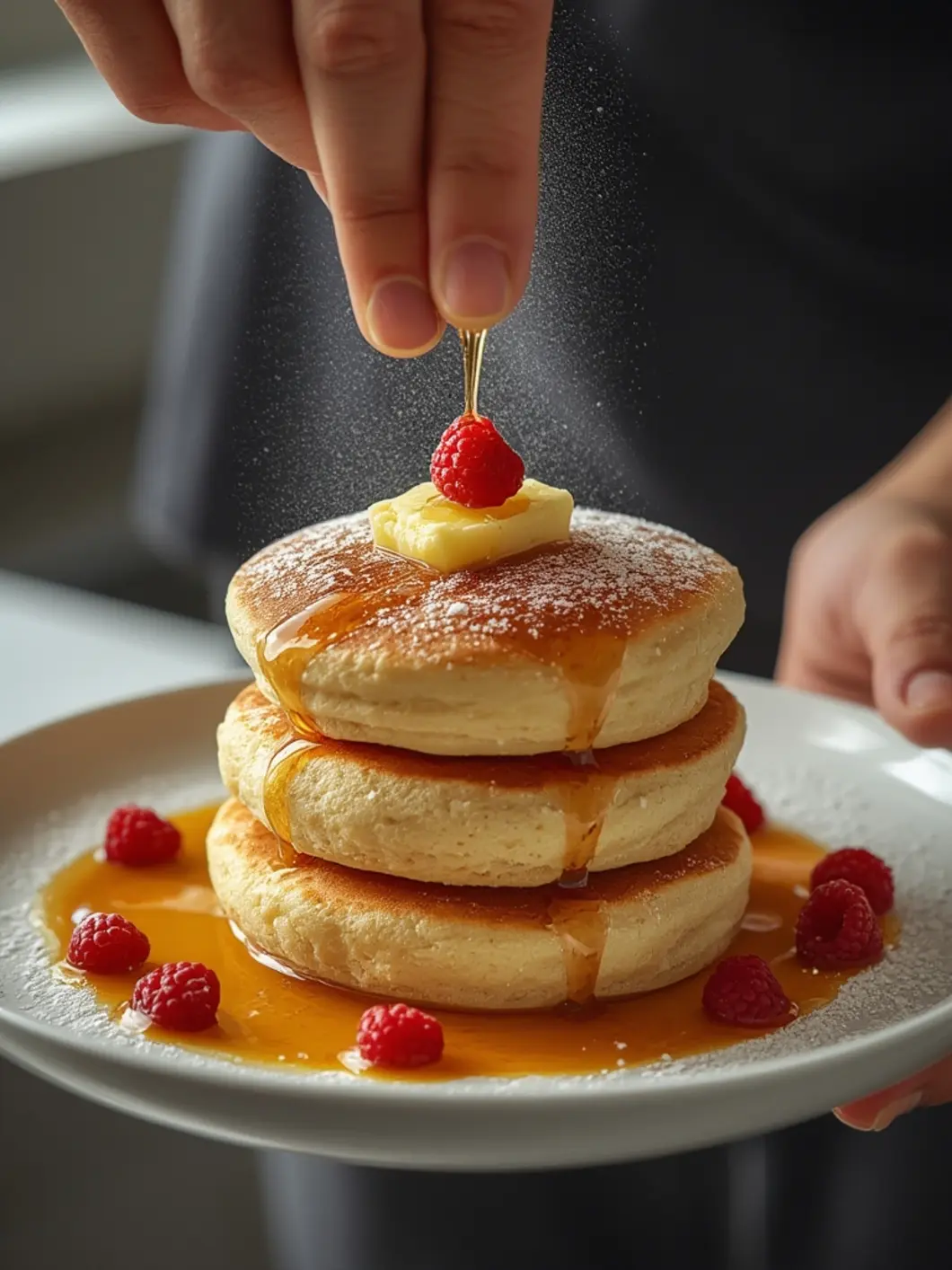
Start by making the base batter. In a medium bowl, whisk the egg yolks, milk, and vanilla extract until smooth. In a separate small bowl, sift together the flour, cornstarch, baking powder, and half of the sugar. Gently fold the dry ingredients into the wet yolk mixture. Do not overmix; a few small lumps are okay. Set this batter aside.
Now comes the most critical step: the meringue. In your clean, grease-free bowl, beat the egg whites on medium speed until foamy. Gradually add the remaining sugar while increasing the speed to high. Continue beating until stiff, glossy peaks form. When you lift the beater, the peak should stand straight up without drooping. This provides the lift for your Japanese Souffle Pancakes.
Gently fold the meringue into the yolk batter in three additions. Use a spatula to cut through the center and fold over, rotating the bowl. Be very gentle to keep as much air inside as possible. The final batter should look fluffy and airy.
Heat your non-stick skillet over very low heat and grease it lightly with oil or butter. Place your cooking rings onto the skillet. Pour the batter into the rings, filling them to the top. Add a teaspoon of water to the edge of the pan (not directly on the pancakes) and immediately cover with a lid. This steaming technique cooks the centers gently.
Cook for about 3–4 minutes. The bottoms should be golden brown, and the tops should look mostly set. Now, for the flip: remove the lid and carefully remove the rings. Slide your spatula completely under the pancake stack and flip it quickly but gently. Add another teaspoon of water to the pan, cover again, and cook for another 2–3 minutes until the other side is golden. Serve immediately.
Why You’ll Love This Recipe / Health Benefits
Japanese souffle pancakes recipe offers a lighter alternative to traditional breakfast fare. Because they rely on egg whites for volume rather than large amounts of butter or oil, they feel less heavy on the stomach. It is a treat that satisfies a sweet tooth without leaving you feeling sluggish.
The texture of fluffy Japanese pancakes is unlike anything else. That cloud-like bite is pure comfort food. Learning how to make Japanese souffle pancakes is a skill that will impress your family and guests, turning a simple breakfast into a special occasion.
Variations, Substitutions, or Serving Suggestions
Once you master the basic Japanese Souffle Pancakes, you can start getting creative. For a matcha version, swap 1 teaspoon of flour for high-quality matcha powder. This gives the pancakes a beautiful green hue and an earthy flavor that pairs perfectly with the sweetness.
If you prefer fruit, fold fresh blueberries or diced strawberries directly into the batter just before cooking. I love topping mine with a dollop of whipped cream, fresh fruit, and a drizzle of maple syrup. For a savory twist, omit the sugar and vanilla, and fold in shredded cheddar cheese and chopped chives.
Common Cooking Mistakes to Avoid
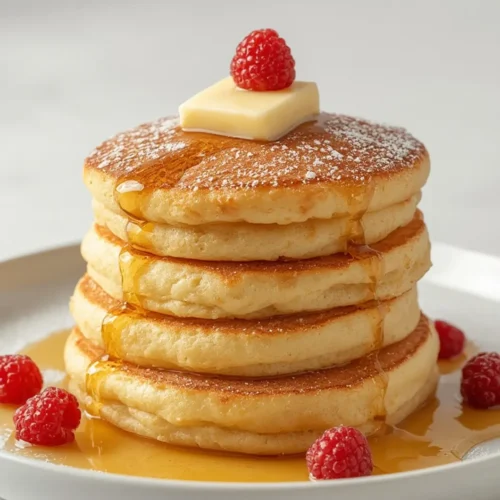
The biggest mistake is turning the heat up too high. These pancakes burn easily on the outside while remaining raw inside. Keep your skillet on the lowest setting and let the steam do the work. Rushing the cooking process is the enemy of good Japanese Souffle Pancakes.
Another common error is deflating the batter. When folding the egg whites, be gentle. If you overmix, you lose the air bubbles that make the pancakes fluffy. Finally, a weak meringue will ruin the structure. Ensure your bowl is spotless and your egg whites are beaten to stiff peaks for the best fluffy Japanese pancakes.
Storage & Reheating Tips
These pancakes are best eaten immediately off the stove. They rely on the trapped air for their volume, and they will naturally deflate as they cool. I highly recommend making exactly what you plan to eat. However, if you have leftovers, store them in an airtight container in the refrigerator for up to 2 days.
To reheat, avoid the microwave if possible, as it will make them rubbery. The best method is to warm them gently in a toaster oven or a dry skillet over low heat for a minute or two. This helps restore some crispness to the edges, though they will never be quite as airy as when they were fresh.
Conclusion
Mastering Japanese Souffle Pancakes is a rewarding journey for any home cook. It teaches patience, the importance of technique, and the joy of a truly special breakfast. With this tested recipe and the tips I’ve shared from my own kitchen, you have everything you need to recreate that famous jiggly texture. Give this Japanese souffle pancakes recipe a try this weekend; the smile on your face will be as wide as the stack on your plate.
FAQs
Why are my pancakes flat?
This usually happens if the egg whites weren’t whipped to stiff peaks, or if the batter was overmixed. Deflating the batter releases the air needed for the rise.
Can I use a blender to mix the batter?
I do not recommend it. A blender tends to overmix the batter and can break down the egg whites. A hand mixer and a spatula give you the control needed for this recipe.
What is the best heat setting for cooking?
Always use the lowest heat setting on your burner. High heat will burn the bottoms before the centers cook through. You need low and slow heat with a lid to create the necessary steam.
How do I get the browning color right?
If your pancakes aren’t browning, add a tiny bit of oil to the pan. If they are browning too fast, your heat is too high. Adjust accordingly.
Can I make the batter ahead of time?
No, you should make the batter right before cooking. The air bubbles in the meringue will collapse if the batter sits for too long, leading to dense pancakes.
Japanese Souffle Pancakes
Equipment
- Large mixing bowl
- Electric hand mixer or stand mixer
- Non-stick Skillet or Frying Pan
- Spatula
- Parchment paper
- Ring Molds (approx. 3-inch diameter)
Ingredients
Pancake Batter
- 2 large Eggs Separated into yolks and whites
- 2 tbsp Milk Whole milk preferred
- 1/2 tsp Vanilla Extract
- 1/2 cup Cake Flour Sifted (All-purpose can work but cake flour is lighter)
- 1 tsp Baking Powder
- 2 tbsp Granulated Sugar Divided (1 tbsp for batter, 1 tbsp for meringue)
- 1/4 tsp Cream of Tartar Stabilizes egg whites
- 1 pinch Salt
For Cooking & Serving
- 1 tbsp Neutral Oil Vegetable or Canola oil for greasing pan
- 2 tbsp Butter Unsalted, for cooking
Toppings (Optional)
- 1 serving Maple Syrup
- 1 serving Whipped Cream
- 1 serving Fresh Berries Strawberries, blueberries, raspberries
- 1 serving Powdered Sugar
Instructions
- Prepare the dry mix: In a medium bowl, sift together the cake flour and baking powder. Set aside.
- Mix the egg yolk base: In a large bowl, whisk the egg yolks, milk, vanilla extract, 1 tablespoon of sugar, and salt until smooth and pale.
- Combine wet and dry: Add the sifted dry ingredients to the egg yolk mixture. Gently whisk until just combined (do not overmix). The batter will be thick.
- Make the meringue: In a separate clean, dry bowl (using an electric mixer), beat the egg whites and cream of tartar on medium speed until foamy. Gradually add the remaining 1 tablespoon of sugar.
- Stiff peaks: Increase speed to high and beat until stiff, glossy peaks form. The meringue should hold its shape when the beaters are lifted.
- Fold in meringue: Gently fold 1/3 of the meringue into the batter with a spatula to lighten it. Then, carefully fold in the remaining meringue in two additions. Be gentle to keep the air bubbles intact.
- Preheat pan: Place a non-stick skillet over very low heat. Add a little oil and butter to coat the surface lightly.
- Shape the pancakes: If using ring molds, place them in the pan and lightly grease the insides. Scoop large dollops of batter into the molds, building them up high (about 1.5 to 2 inches tall).
- Cook the bottom: Let cook on very low heat for about 5-6 minutes until the bottoms are golden brown and the batter has risen significantly.
- The Flip: Carefully lift the pancakes with a spatula. Add a small dot of butter to the pan if needed. Quickly flip the pancakes over. If not using molds, you may need to scoop a little extra batter on top right after flipping to maintain height.
- Cook the other side: Cover the pan with a lid (or a sheet of foil) to trap steam. Cook for another 4-5 minutes on low heat until cooked through.
- Serve immediately: Remove from the pan carefully (they are delicate!). Serve immediately topped with maple syrup, whipped cream, and fresh berries.